
Mapping the Electronic Structure of NiTe2
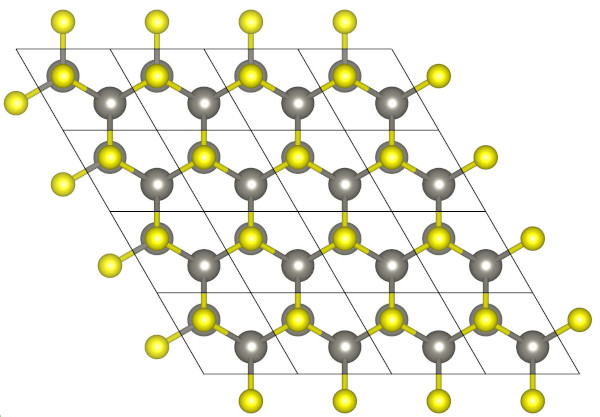
Transition metal dichalcogenides (TMDCs) are a family of 2D materials with the general formula MX2 — M a transition metal (tungsten, molybdenum, etc.), X a chalcogen (sulfur, selenium, or tellurium). Their band gap is tunable by thickness: bulk and few-layer TMDCs have an indirect gap, but at the monolayer limit, the valence-band maximum and conduction-band minimum shift to the K-point, producing a direct gap. That direct gap — paired with strong light–matter interaction — makes TMDCs compelling for optoelectronics.
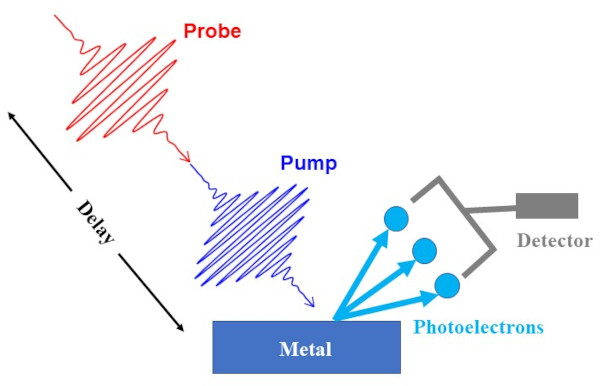
I contributed to a project mapping the band structure of NiTe2, a Dirac semimetal in the TMDC family, using photoemission spectroscopy. Understanding a material's electronic structure both above and below the Fermi level is essential to understanding its properties — but conventional ARPES can only probe states above the Fermi level. Our momentum microscope extends that reach, resolving band structure below the Fermi level as well.